


A series of acquisitions and share purchases offers investors a broader perspective on U.S. housing, its investment cycle and the demand for developable land.
Negative headlines can make a housing slowdown feel like a verdict on the entire U.S. economy. Higher borrowing costs and cautious buyers deserve attention. However, investors also need to examine decisions being made beyond the daily news cycle, particularly when substantial capital is committed across several businesses.
Berkshire Hathaway’s recent housing activity provides that perspective. During the second and third quarters of 2026, and into early October, its exposure expanded through national and regional acquisitions alongside purchases of listed homebuilder shares.
A Broader Economy with Different Pressures
U.S. real GDP grew at an estimated annualized rate of 3.4% in the third quarter, following 2.2% in the second. Meanwhile, September payroll employment increased by only 29,000, with unemployment at 4.2%.1,2 These releases show expansion alongside weak hiring. The GDP figure is an advance estimate, subject to revision. Economic conditions differ across sectors, creating a more complex investment landscape than a single headline suggests.

A Pattern of Capital Commitments
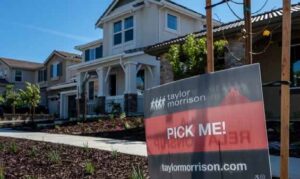
Berkshire completed its Taylor Morrison (ranked No.6 largest homebuilder in the U.S.)3 acquisition on July 24, 2026, paying approximately $6.8 billion in cash equity value, with a total enterprise value of approximately $8.5 billion.4 The transaction expands its wholly owned homebuilding operations. Its significance here is the scale of capital committed during difficult market conditions.
Lennar (ranked No.2 largest homebuilder in the U.S.)3 shows a separate form of commitment. Berkshire reported 26.03 million Class A shares as September 30, nearly twice its June holding of 13.11 million.6,7 Additional purchases brought that figure to 28.44 million by October 2, alongside approximately 568,000 Class B shares. Across September 17–October 2, disclosed purchases totalled approximately $595 million, calculated from the reported share quantities and prices.8
Regional expansion also continued. In July, McGuinn Homes joined Mungo Homes within Berkshire’s Clayton group, extending its presence in South Carolina and Georgia. Financial terms were undisclosed.9 This adds a local dimension to the larger national acquisition and listed equity investments.
Berkshire’s June quarter-end disclosure also listed 3,564 D.R. Horton (ranked No.1 largest homebuilder in the U.S.)3 shares worth approximately $580,504.6 That position is modest beside the other transactions. It remains part of the broader picture, but carries far less weight as evidence of investment conviction.
What the Investment Pattern Tells Investors
Together, these actions span business ownership, regional expansion and minority equity stakes. They suggest an interest in building exposure through different routes while the sector faces near-term pressure. They do not establish a timetable for recovery or make every housing investment attractive.
Berkshire CEO Greg Abel described the Taylor Morrison agreement as “reflecting our long-standing commitment to housing.”5
That statement gives context to the wider activity. Homebuilding involves planning, development and delivery over several years. Capital with a longer horizon can assess business prospects across that cycle, while still accounting for affordability, financing and execution risks.
The Implications Extend to Land
Expanding homebuilding operations requires a steady supply of lots, and the largest builders increasingly rely on others to provide them. As of August 31, 2026, Lennar owned approximately 2% of its homesites, with 98% controlled through option contracts with third parties and joint ventures.10 D.R. Horton ended its fiscal year with 571,000 lots, 23% owned and 77% controlled through purchase contracts, and 68% of its fiscal 2026 closings were on lots developed by Forestar or third parties, up from 65% a year earlier. When major investors commit capital to builders, the land developers and investors who supply those lots are part of the same value chain.11
For investors, Berkshire’s activity is a prompt to examine the housing value chain with greater discipline. Land demand depends on local housing needs and builders’ capacity to deliver profitably; slower sales can delay purchases and extend holding periods. The investment case rests on where suitable land, sustainable buyer demand and capable builders align. Recent capital commitments offer perspective, while each investment still requires its own assessment of price, structure and risk.
Sources
1 BEA — GDP advance estimate, Q3 2026, released October 29, 2026. https://www.bea.gov/news/2026/gdp-advance-estimate-3rd-quarter-2026
2 BLS — Employment Situation, September 2026, released October 2, 2026. https://www.bls.gov/news.release/archives/empsit_10022026.htm
3 Builderonline — 2026 The Top 100, released April 24, 2026. https://www.builderonline.com/builder-100/builder-100-list/2026/
4 Berkshire Hathaway and Taylor Morrison — acquisition completion announcement, July 24, 2026. https://www.berkshirehathaway.com/news/jul2426.pdf
5 Berkshire Hathaway and Taylor Morrison — acquisition agreement announcement, May 31, 2026. https://www.berkshirehathaway.com/news/may3126.pdf
6 Berkshire Hathaway — June 30, 2026 Form 13F information table, filed August 14. Lennar Class A: 745,392 + 12,366,349 = 13,111,741. D.R. Horton: 3,564 shares, $580,504 reported value. https://www.sec.gov/Archives/edgar/data/1067983/000119312526352200/xslForm13F_X02/56757.xml
7 Berkshire Hathaway — September 30, 2026 Schedule 13G/A, filed October 7. Class A shares: 26,034,436; reported class ownership: 12.5%. https://www.sec.gov/Archives/edgar/data/1067983/000119312526417254/0001193125-26-417254.txt Lennar growth calculation. 26,034,436 / 13,111,741 − 1 = 98.6%. This compares Class A shares on the same basis. The supplied 94% growth figure is not used.
8 Berkshire Hathaway — four SEC Form 4 filings covering September 17–October 2, 2026. Purchase spending calculated as shares acquired multiplied by the reported weighted average prices; excludes fees. Rounded public figure: approximately $595m. https://www.sec.gov/Archives/edgar/data/920760/000119312526397059/xslF345X03/ownership.xml, https://www.sec.gov/Archives/edgar/data/920760/000119312526403089/xslF345X06/ownership.xml, https://www.sec.gov/Archives/edgar/data/920760/000119312526409451/xslF345X03/ownership.xml, https://www.sec.gov/Archives/edgar/data/920760/000119312526414744/xslF345X06/ownership.xml
9 Whelan Advisory — Clayton Properties Group Acquires McGuinn Homes, July 6, 2026; https://www.whelanadvisoryllc.com/deal-announcements/clayton-properties-group- acquires-mcguinn-homes
10 Lennar — Preliminary Prospectus Supplement, released April 10, 2026. https://www.sec.gov/Archives/edgar/data/920760/000119312526419825/d184105d424b2.htm
11 Businesswire — D.R. Horton, Inc. and subsidiaries consolidated balance sheets (Audited) https://www.businesswire.com/news/home/20261028498589/en/D.R.-Horton- Inc.-Americas-Builder-Reports-Fourth-Quarter-and-Fiscal-2026-Earnings-and-Increases-Quarterly-Dividend-to-$0.50-Per-Share
Disclaimer
The information contained in this document is provided for informational and reference purposes only and should not be construed as investment, financial, legal, or tax advice. While every effort has been made to ensure the accuracy of the content, no representation or warranty is given as to its completeness or reliability. Readers should conduct their own research or consult a qualified professional before making any investment or business decisions. Walton Global accepts no liability for any loss arising from the use of this information. Walton and its representatives are not licensed to deal with any property located in Mainland China, Hong Kong, Macau, Taiwan, Japan, Korea, UAE, Singapore, Malaysia, Thailand, Vietnam, India and Indonesia. Berkshire CEO Greg Abel described the Taylor Morrison agreement as “reflecting our long-standing commitment to housing.”5 Investment 4 6,8 9 6 Timeline Closed July 24, 2026 Q2–Q3; purchases through October 2, 2026 July 2026 As of June 30, 2026 Size or Disclosed Holding $6.8bn cash equity; $8.5bn enterprise value About $595m additional purchases, Sept 17–Oct 2; 28.44m A + 0.568m B shares as Oct 2 Undisclosed 3,564 shares; reported value $580,504 Investment Context Wholly owned national homebuilding expansion Increased listed equity exposure; Class A holding nearly doubled in Q3 Regional acquisition through Mungo / Clayton; South Carolina and Georgia Small minority equity position; limited weight as a strategic signal The Implications Extend to Land Expanding homebuilding operations requires a steady supply of lots, and the largest builders increasingly rely on others to provide them. As of August 31, 2026, Lennar owned approximately 2% of its homesites, with 98% controlled through option contracts with third parties and joint ventures. 10 D.R. Horton ended its fiscal year with 571,000 lots, 23% owned and 77% controlled through purchase contracts, and 68% of its fiscal 2026 closings were on lots developed by Forestar or third parties, up from 65% a year earlier. When major investors commit capital to builders, the land developers and investors who supply those lots are part of the same value chain. 11 For investors, Berkshire’s activity is a prompt to examine the housing value chain with greater discipline. Land demand depends on local housing needs and builders’ capacity to deliver profitably; slower sales can delay purchases and extend holding periods. The investment case rests on where suitable land, sustainable buyer demand and capable builders align. Recent capital commitments offer perspective, while each investment still requires its own assessment of price, structure and risk. That statement gives context to the wider activity. Homebuilding involves planning, development and delivery over several years. Capital with a longer horizon can assess business prospects across that cycle, while still accounting for affordability, financing and execution risks.